
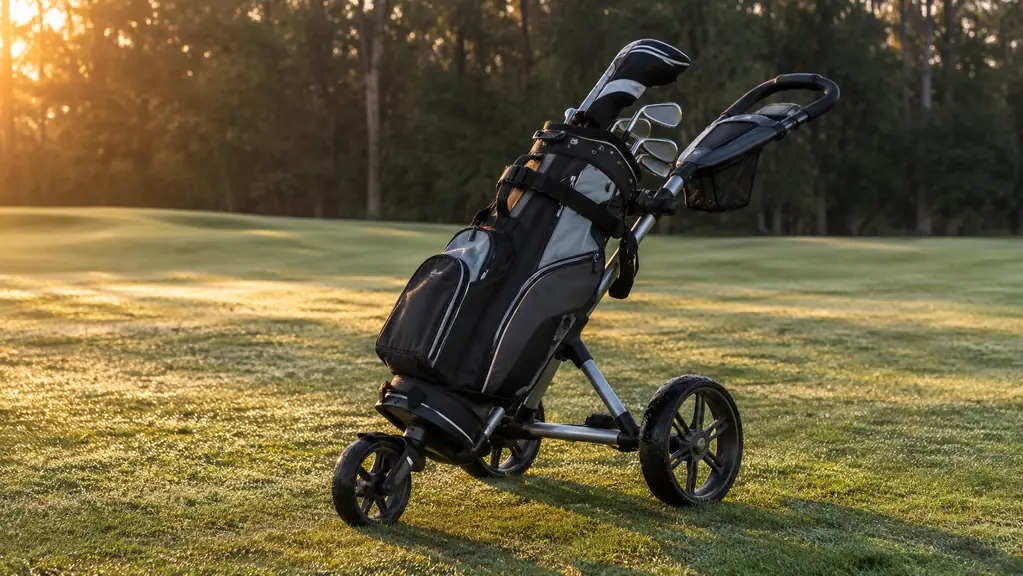
The short answer first, because that is the part I want when I read one of these. The Caddytek CaddyLite 11.5 V3 is the cart I have pushed for two seasons, three rounds a week, and it is the one I would buy again tomorrow. The KVV three wheel push cart is the one a fella in our Thursday foursome pushes, and it does what he asks of it without complaint. If your cart gets folded down twice a week and rides in the back of a car, the Caddytek earns what it costs. If your cart lives in the garage and comes out for one round on Saturday, the KVV is honest transportation and nothing more than that. That is the comparison in six sentences. The rest of this is the reasoning.
I am 67, retired after 34 years as a commercial airline mechanic, and I live about twenty minutes south of Knoxville. I play three rounds a week at a public course near Maryville and I walk every one of them. Before April 2025 I carried a stand bag on one shoulder for twelve years, and my lower back told me about it on the back nine and again the next morning. My doctor puts it down to ordinary wear and muscle tightness rather than a disc problem, and he told me to stay active rather than quit walking. So I did not quit the game. I changed what was carrying my clubs. That is how a push cart got into my life, and why I have opinions about one.
| Caddytek CaddyLite 11.5 V3 | KVV 3 Wheel Push Cart | |
|---|---|---|
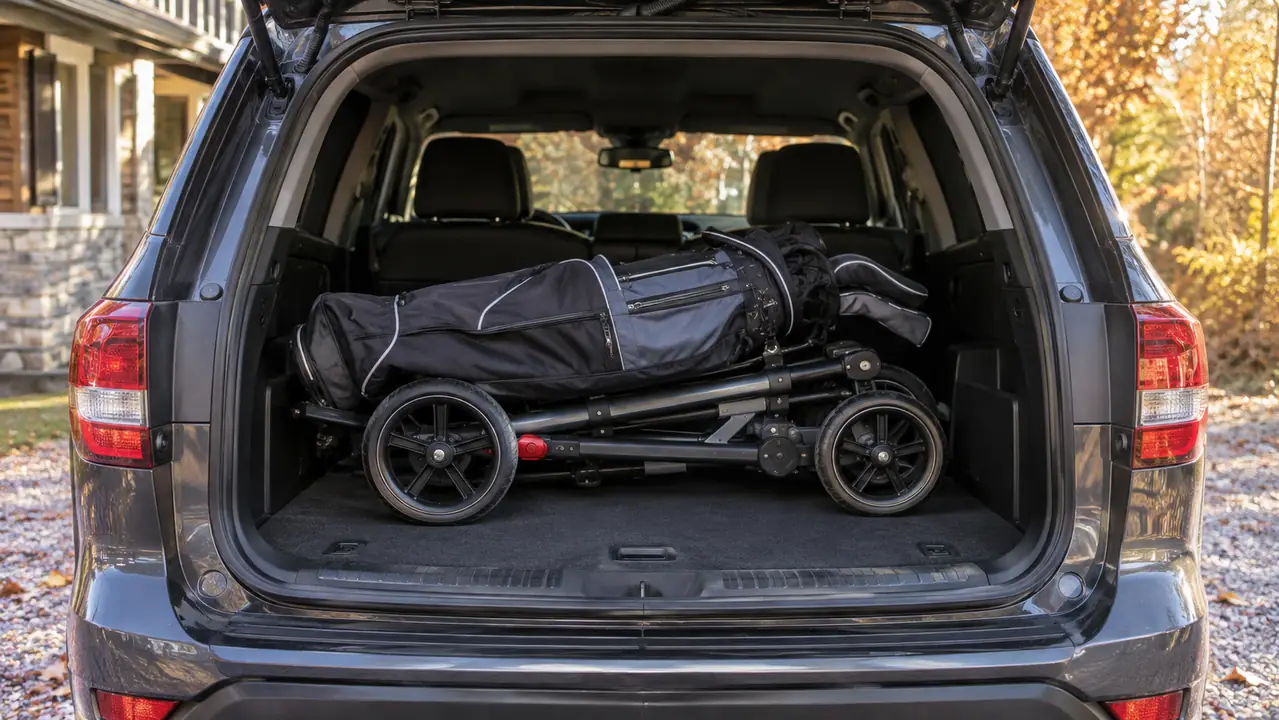
| Folded size | Quad-fold frame comes down into one short bundle that rides in the back of my CR-V with the stand bag laid on top of it | Folds, but into a longer bundle. He lays his across the whole trunk |
| Frame and weight | Aluminum, 13.8 pounds as the listing states. I lift it out of the car one handed | He calls his the heavy one when he loads it, and he is only half joking |
| Rolling over roots and soft ground | Dual 11.5 inch rear wheels and a 10.5 inch front wheel. The roots by our fourth green and the soft spot short of the fifth do not stop it | Rolls fine on fairway. On the rooty stretch he slows down and I do not |
| Handle | Adjustable TPR grip. I set it in April 2025 and have not moved it since | Adjustable as well, and he set his the same way |
| Brake | Foot brake that has held on the ninth tee slope for two seasons | Foot brake as well |
| Factory storage | Mesh net, magnetic pad, umbrella holder and drink holder, all of it included | Umbrella holder and a drink holder. The rest he rigged himself with clips and a bag |
| Moving parts | More hinges and clips to check and wipe clean each spring | A simpler frame. Nothing to learn and less to go wrong |
| Cost to get started | More up front | Less up front |
| Warranty | One year limited, covering defects and workmanship under normal use | Whatever KVV states in its listing. I have never had to test it |
| Best for | The walker who folds it twice a week and wants it small | The walker who leaves it in the garage and wants simple |
A word on how that table got built. I have owned the Caddytek since April 2025 and I have never owned a KVV. What I know about the KVV comes from two seasons of watching it get pushed beside mine, from loading both in a parking lot a few times, and from the two holes he let me take it for in September. Where I could not tell you the difference honestly, the row says so.
Where the Caddytek CaddyLite Wins
The fold is the whole reason I bought this cart, and it is still the reason I would buy it again. The frame is a quad-fold, which means it comes down in stages into one short bundle instead of a long one. I pull it out of the back of the CR-V in the parking lot, drop the front wheel, pull the handle up, and I am walking in under a minute. When the round is over I lay my stand bag on top of the folded cart and there is still room for my shoes and a jug of water. A cart that folded into a long bundle would ride across the whole trunk and my bag would end up on the back seat. That sounds like a small thing until you do it three times a week for two seasons.
Second is how it rolls. The cart sits on dual 11.5 inch rear wheels and a 10.5 inch front wheel, and those numbers matter more than they read on a listing page. Our course has a rooty stretch on the way to the fourth green and a low wet spot that stays soft until June. Bigger wheels go over that without stopping dead, and I do not have to lift the handle and drag the thing through it. I push with two hands on flat ground and one hand up the hills, and my shoulders are not sore the way they were when I carried. On the back nine, which is where my back used to talk to me, I am still walking upright and still swinging the way I did on the first tee. Third are the small things that came with it. The mesh net holds my glove, a couple of tees, a towel and a bottle. The magnetic pad keeps the scorecard from flapping. The umbrella holder earned its place on a wet Tuesday in October when the rain came in sideways on the twelfth. The drink holder is on the handle where I can reach it without stopping. I did not rig a single one of those.

Where the KVV Wins
I am not going to pretend the KVV is a bad cart, because it is not. It holds a bag, it rolls, the brake works, and it folds. The fella who pushes it has played with it longer than I have had mine and he has never had to fix anything on it. If you want a cart that does the job and asks nothing of you in return, that is what he has.
Where the KVV genuinely beats the Caddytek is simplicity, and what you pay to get started. There is less on it. Fewer hinges, fewer clips, fewer things to keep clean and check over each spring. When we both fold up at the end of a round, he is done before I am and he never has to think about the order he does it in. A simpler frame is a real advantage if you are the sort of man who leaves the cart in the garage between rounds and does not want to learn a sequence. And it costs less up front, which matters if this is your first cart and you are not yet sure that walking is going to stick. If you walk once a month, the extra the Caddytek costs buys you convenience you will use four times a season. That is a poor trade, and I would tell you so at the grill.
The cart I have pushed for two seasons and would buy a third time
Aluminum frame, quad-fold, foot brake, dual 11.5 inch rear wheels. It goes in the back of a CR-V with the stand bag on top of it and comes out again in under a minute.
Amazon Check today's price on Amazon →How I Ended Up Behind a Cart in the First Place
Twelve years of a stand bag on one shoulder is a long experiment in whether a man learns from his own back. I did not, not for a while. In the last two seasons of carrying, the front nine was fine and the back nine was a negotiation. I would get to the fourteenth, set the bag down, and stand there with my hands on my hips for a minute before I hit. The morning after a round, tying my shoes was a project. It was not sharp and it did not run down my leg, which is the thing my doctor told me to watch for. It was a stiff, achy lower back, worst on the first tee and worst the day after. My doctor put it down to ordinary wear and muscle tightness, told me to keep moving, and my physical therapist gave me a warm-up routine about three years ago that I still do in the driveway before I leave.
None of that is a cure and I am not selling one. What changed my rounds was mechanical. I stopped hanging a bag of clubs off one shoulder and started pushing them. The first month with the Caddytek I noticed the difference on the back nine. By the second month I noticed it the next morning. A cart moves the load from your shoulder to the ground, and that is all it does, but that turned out to be most of what I needed.
What the Specs Mean Once You're Standing Behind It
The listing states an aluminum frame at 13.8 pounds, and one of the bullet points says 13.75. I have never put it on a scale that would settle a quarter pound, and either number is light enough that I lift the folded cart out of the car with one hand while holding the door with the other. That matters more than it sounds. A cart you dread lifting is a cart that stays in the car. I am 67 with a stiff back and I have never once thought about the weight of this thing, and that is the whole review of the weight. The box it arrived in measured 35 by 11 by 11 inches, and that is a fair picture of the folded bundle you are storing.
The handle is a TPR grip and it adjusts, and I set it for my height in April 2025 and have not touched it since. The brake is a foot pedal. It wants a firm stomp rather than a tap, and on the slope by the ninth tee, which is steep enough that a cart without a working brake will roll into the creek, it has held for two seasons. The frame carries a one year limited warranty covering manufacturing defects and workmanship under normal use. I have not had to use it. What I will tell you is that on a cart the parts that wear are the wheels and the brake, so those are the two things I check every spring. I wipe the grit out of the folding joints, I look at the tread, and I stand on the brake in the driveway. Ten minutes, once a year.
Two seasons and something north of 200 rounds, and the folding joint still snaps the way it did in April 2025.
Two Seasons and Something North of 200 Rounds
I have walked north of 200 rounds with this cart since April 2025, through two full seasons and into this fall. The wheels have not gone out of true. The folding joint still snaps the way it did the first week, and it does not rattle when I push it over the rooty stretch. The brake has held on the ninth tee slope in frost. The mesh net has stretched a little where I keep a bottle, which is what mesh does, and it has not torn. It lives in the back of the CR-V with the bag on top of it and never comes into the house. It has been wet and it has been muddy, and I hose it off in the driveway and let it dry open in the sun. Nothing has seized.
The one thing I would tell you to watch is the folding latch. In the cold it takes a firm hand, and the first month I owned it I fought with it in the parking lot at 7:30 on an April morning. There is an order to it. Handle down, then the front wheel, then the rear legs. Once that order is in your hands you can do it in the dark, and I have. The KVV does not have that learning curve, and that is the honest trade you make for the smaller bundle.
Who Should Buy Which
Buy the Caddytek CaddyLite 11.5 V3 if you walk regularly and you have to fold the cart down and put it in a car every time. That is the exact use it was built for, and it is the use I put it to three times a week. It is also the cart to buy if your back has started to make carrying unpleasant, because the point of a cart is that the ground carries the bag instead of your shoulder. Mine has done that for two seasons without a single part replaced.
Buy the KVV if you want a cart that folds, rolls, brakes and asks nothing else of you, and you are not worried about how small it gets. If it lives in a garage and your car has a big trunk, the folding difference is a difference you will never notice. If you are new to walking, or you are not sure you will keep at it, spending less on a first cart is sensible. Whichever you buy, if your back is the reason you are shopping, see your doctor first, and see one right away if the pain is sharp, runs down a leg, or does not settle. A cart changes how the load gets carried. It does not fix anything, and it is no substitute for the warm-up your physical therapist gave you. That is what I would say across the table.
One cart, two seasons, three rounds a week
Quad-fold frame, foot brake, 11.5 inch rear wheels, and the mesh net, magnetic pad, umbrella holder and drink holder already on it. It is the cart I would buy again tomorrow.
Amazon Check today's price on Amazon →